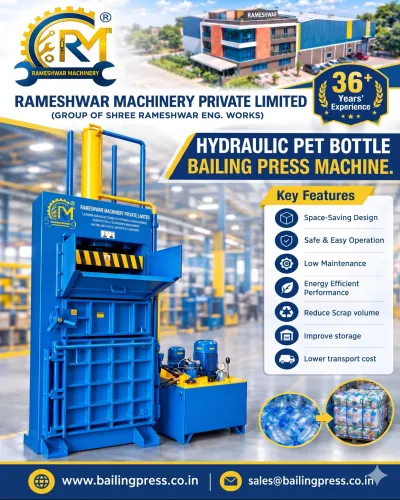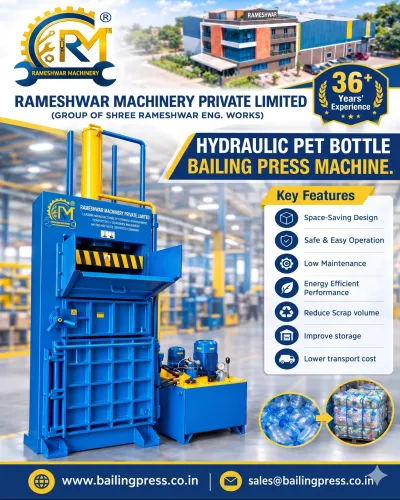
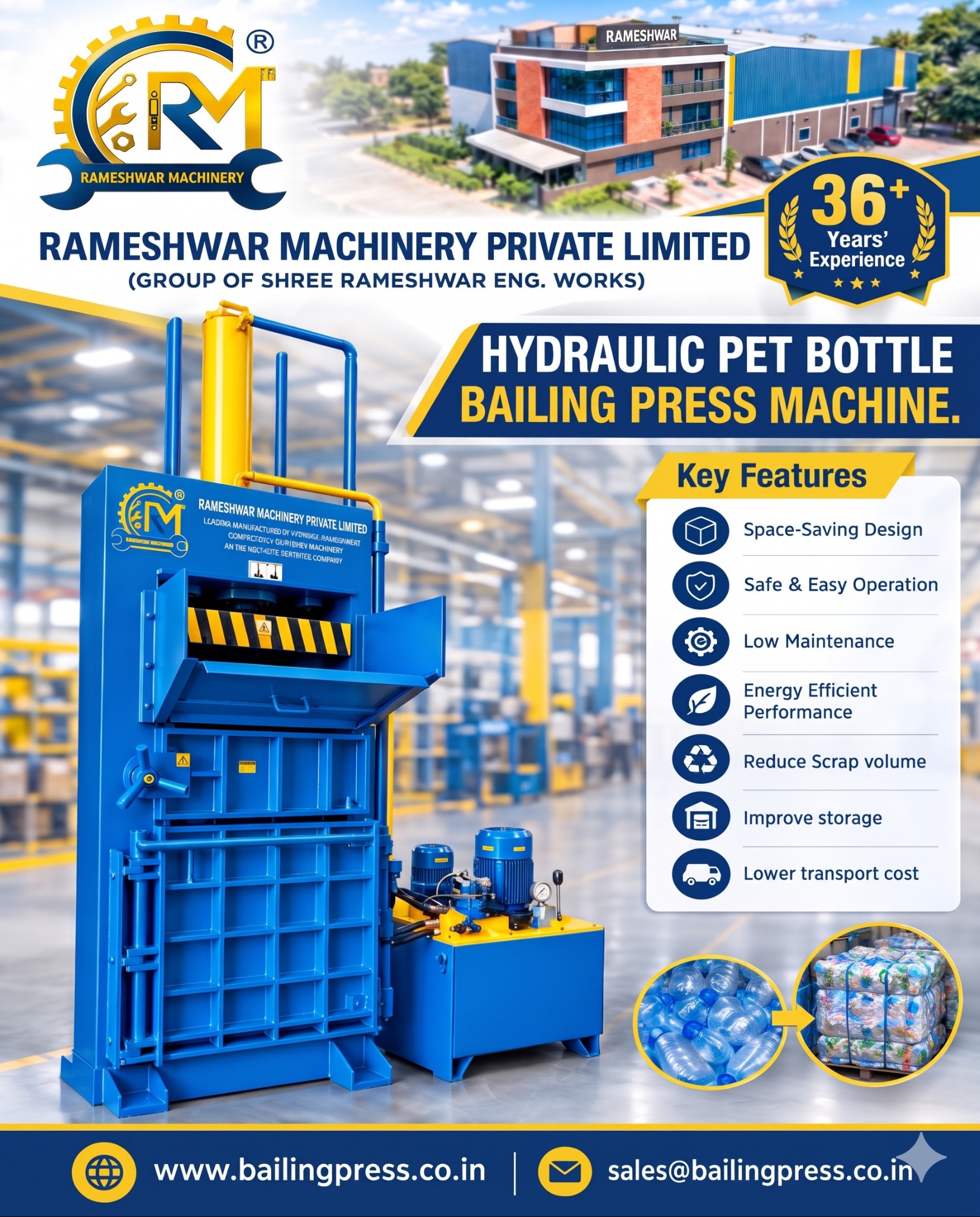
A PET bottle baler works properly only when the bottles arriving at its chamber have been sorted, drained and prepared for the chosen feed method. By the end, you will be able to compare single-box, double-box and four-cylinder designs using bale quality, real throughput, safety and installation requirements rather than tonnage alone.
Key takeaways
- Sort out metal, glass, paper and non-PET plastics before baling.
- Drain bottles before loading; moisture reduces bale quality and raises handling problems.
- Choose single-box or double-box operation based on loading and tying downtime.
- Compare cylinder layout, chamber size, bale weight and ejection cycle together.
Where the Baler Fits in a PET Bottle Recycling Line
A PET bottle recycling line receives, sorts and drains bottles before feeding them to a plastic recycling baling press. Remove metal, glass, paper, dirt and non-PET plastics first; a baler cannot repair poor sorting. Drain residual liquid, then load the prepared bottles into the chamber.
The operating sequence is:
- Feed bottles evenly through the opening, avoiding voids at the corners.
- The platen compresses the charge through its stroke; pressure-holding time affects density and springback.
- Tie or strap the compressed package while it remains restrained.
- Eject the bale with the machine’s discharge system, then store it on a dry, stable surface away from traffic and rain.
Bottle preparationWhat changesWhen it appliesWhole, loose bottlesRetain air, fill irregularly and spring back after pressingA chamber accepts irregular bulk material and has a large feed openingPerforated or flattened bottlesRelease trapped air, improve filling and reduce springbackThe line has a perforator or pre-crusher and needs denser, more stable balesPre-shredded bottlesRequire size-control, guarding and handling equipment; flakes can escape or contaminate more easilyThe recycling process already includes shredding and the baler is designed for loose flakes
Choose preparation from the chamber feed opening, platen stroke, target bale mass and machine’s bulk-material capability. Perforation or pre-crushing adds power use, noise and liquid leakage; shredding changes the equipment and handling system rather than simply improving baling.
How Sorting and Moisture Control Determine Bale Quality
A clean bale contains PET bottles sorted by resin and colour, drained, and stripped of obvious foreign material before compression. A pet bottle baling machine in gujarat cannot repair bad optical or manual sorting; pressure only hides contamination inside a dense bale.
Clear, light-blue, coloured and opaque PET should follow the buyer’s grade specification. Do not mix them because a buyer making clear flake or food-contact resin may reject a bale with excessive coloured or opaque bottles.
GradeKeep separate whenDownstream concernClear PETThe buyer requires clear flakeColour reduces product valueLight-blue PETThe buyer grades pale blue separatelyMixed colour affects melt and flake consistencyColoured PETThe end market accepts coloured resinIt cannot be restored to clear PETOpaque PETThe buyer permits it explicitlyPigments and additives alter processing
Set measurable limits for PVC, non-PET plastics, paper, metal, glass, dirt and moisture. Use a defined sampling method: weigh a bale, open selected layers, hand-sort contaminants, and report each category by mass percentage. Require a moisture limit with an oven-dry or calibrated moisture-analyser method.
PVC deserves special attention: at PET-processing temperatures it can release hydrochloric acid, causing polymer degradation, corrosion and discolouration. Caps and labels add non-PET mass; remove metal, glass and dirt upstream. Drain liquid, because it increases bale weight without adding useful polymer and encourages odour and mould.
Specify these limits in the purchase contract, then witness a bale trial using the buyer’s actual bottle mix, colour ratio, preparation and moisture level. Judge test results, not surface compactness.
Single-Box and Double-Box Baling: What Changes on the Floor
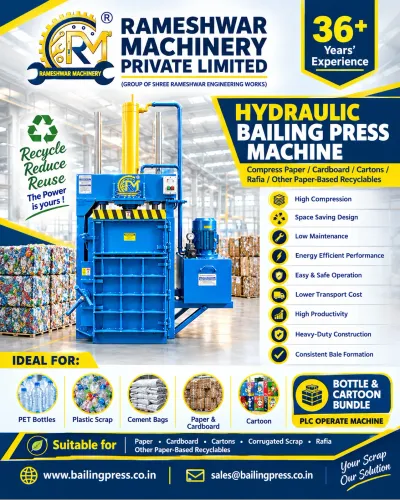
Yes, a double-box single-cylinder layout can reduce waiting because one hydraulic ram serves two alternating chambers. Operators load one chamber while the other is being pressed, tied or cleared; the ram shifts between chambers through a changeover mechanism. It does not contain two independent pressing cylinders.
The search phrase “double box single cylinder bailing machine for pet bottles in ahmedabad” describes this floor arrangement. In technical documents, use “baling machine” or “baler,” not “bailing machine.”
Single-box layout | Double-box single-cylinder layout Floor space | Smaller footprint | More chamber length and changeover clearance Operator movement | Return to one chamber for loading and bale removal | Move between alternating chambers and tying or ejection points Chamber access | One chamber is available at a time | One chamber can remain accessible while the other cycles Bale removal | Loading stops during pressing and discharge | Loading can continue while the other chamber is processed
The productivity gain depends on disciplined operation. Balanced filling keeps bottle mass distributed across the chamber; uneven loading creates density variation, platen skew and guide wear, while increasing side loading on the hydraulic system. Accurate platen guidance and a robust changeover mechanism are essential.
A double-box machine also demands clear guarding around both chambers, the ram path and the changeover zone. It may improve operator utilisation, but manual tying, bale ejection and irregular bottle supply can still become the bottleneck. Choose the simpler single-box layout when floor space, access and low operating complexity matter more than parallel work.
Four Cylinders, Pushers and the Real Ejection Cycle
A four-cylinder hydraulic baler suits a wide chamber where force must reach four ram points without platen skew. A single-cylinder press costs less to maintain, but off-centre PET loading can twist its platen and wear guides.
OptionStrengthTrade-offSingle cylinderSimpler hydraulics and fewer leak pointsMore sensitive to uneven filling and platen skewFour cylindersDistributed force and better platen stability across a wide chamberMore seals, hoses, synchronisation controls, leakage points and maintenance workPusherControlled discharge of a heavy, tightly compressed baleAdds travel time, interlocks, maintenance and another cycle step
Cylinder count does not prove better bale quality or throughput. Bale density depends on bottle preparation, fill consistency, pressure, stroke, tying time and material supply; four cylinders cannot correct a poorly filled chamber.
A pusher earns its cost when bales are heavy, manual access is limited, production is high, or the layout needs discharge into a conveyor or storage position.
Guard the ram and chamber opening, tying zone, automatic changeover and full ejection path. Interlock access doors so pressing, tying and pusher travel cannot start while a person is inside the danger zone.
Never clear a jam by relying on an emergency stop. Apply lockout, isolate electrical and hydraulic energy, dissipate trapped hydraulic pressure, block the ram against gravity movement with a rated mechanical restraint, and verify zero movement before entering the chamber or ejection path.
How to Specify and Compare an Ahmedabad PET Baler
Compare an industrial hydraulic baling press in Ahmedabad or a pet bottle baling machine in Gujarat by measured output, not catalogue tonnage.
SpecificationDemandWhy it mattersHydraulic forceRated pressure, cylinder bore, active piston area and net force; use F = P × A“100 tons” is not comparable without pressure, area and lossesBale performanceTested density, target mass and finished dimensionsPreparation, moisture, stroke and springback change the resultThroughputBottle condition, chamber fill, cycle time, tying time, operator intervention and downtime assumptionsA claimed tonnes-per-hour figure can be misleadingElectrical supplyMotor rating, voltage, frequency, phase, control voltage, earthing and allowable fluctuationPrevents starting and installation failures
Your quotation checklist must also state:
- Chamber dimensions, feed opening, floor space, oil-tank capacity and ejection method.
- Tying method, strap or wire access, bale-release sequence and actual cycle time.
- A witnessed test using your bottle mix, moisture level, preparation method and target bale mass.
- Filtration stages, specified hydraulic-fluid cleanliness, hose protection and maintenance intervals.
- Guarding for the chamber, ram, tying zone, ejection path and automatic changeover; include emergency stops and a documented lockout procedure for pressure dissipation and jam clearing.
- References to ISO 4413 and ISO 16092-3, with evidence of how the design addresses them.
RAMESHWAR MACHINERY PRIVATE LIMITED can be evaluated against this same data sheet, including its pusher arrangement, rather than by model capacity alone.
Related products
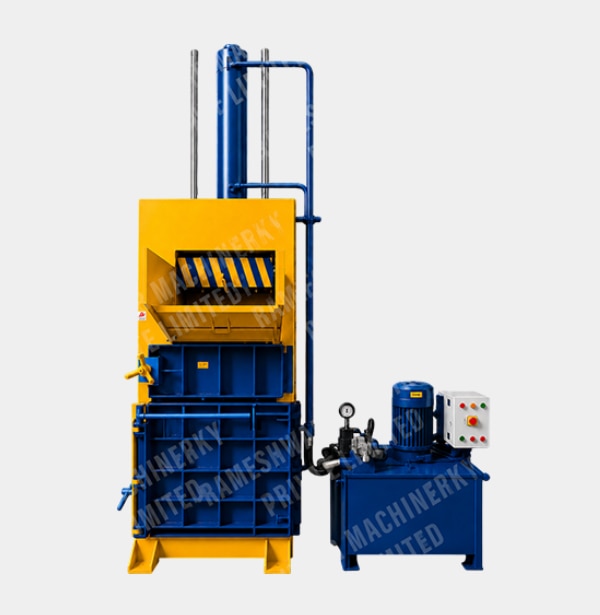 PET Bottle Baling Machine
60 Ton Pet Bottle Baling Press
from Rameshwar Machinery is listed with reference specifications and product imagery sourced from the manufacturer catalog.
View product →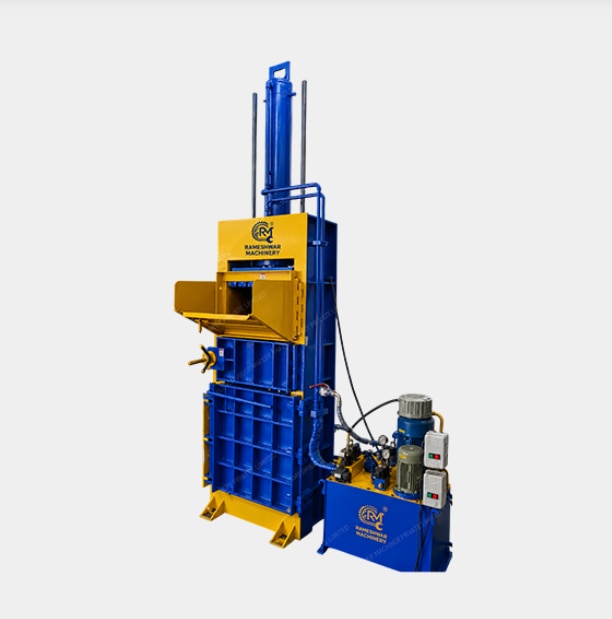 PET Bottle Baling Machine
75 Ton Pet Bottle Baling Press
from Rameshwar Machinery is listed with reference specifications and product imagery sourced from the manufacturer catalog.
Frequently asked questions
- Where does a hydraulic baling press fit in a PET bottle recycling line?
- It follows sorting and draining. Remove metal, glass, paper, dirt and non-PET plastics before loading prepared bottles into the chamber.
- How do sorting and moisture affect PET bale quality?
- Poor sorting leaves contamination that a baler cannot remove. Residual liquid adds weight, affects handling and can reduce bale quality, so drain bottles before pressing.
- What is the difference between single-box and double-box PET baling?
- A single-box machine uses one chamber, while a double-box arrangement lets operators prepare one box while the other is pressed or unloaded, reducing loading interruptions.
- What should you compare when specifying an Ahmedabad PET bottle baler?
- Compare chamber dimensions, target bale size and weight, hydraulic pressure, cylinder arrangement, pusher design, tying access, ejection cycle and available floor space.
Related products
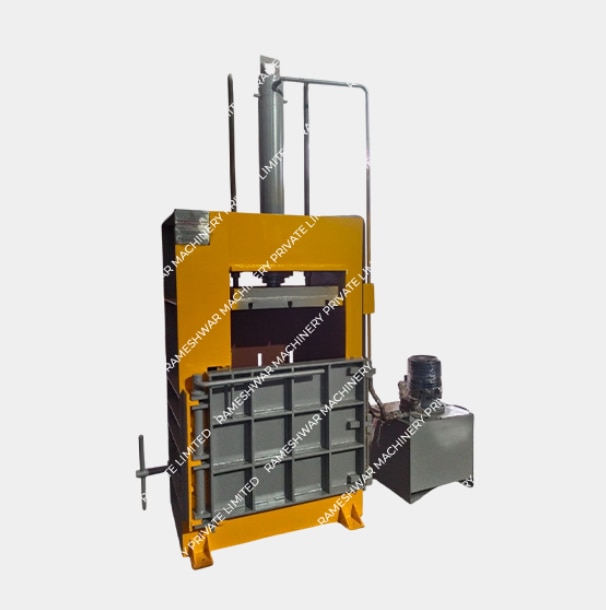 PET Bottle Baling Machine
30 Ton Pet Bottle Baling Press
from Rameshwar Machinery is listed with reference specifications and product imagery sourced from the manufacturer catalog.
View product →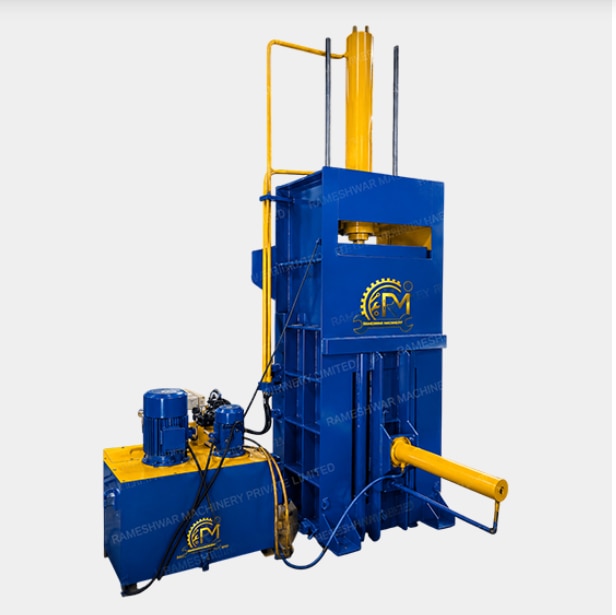 PET Bottle Baling Machine
60 Ton Pet Bottle Baling Press With Pusher
from Rameshwar Machinery is listed with reference specifications and product imagery sourced from the manufacturer catalog.
View product →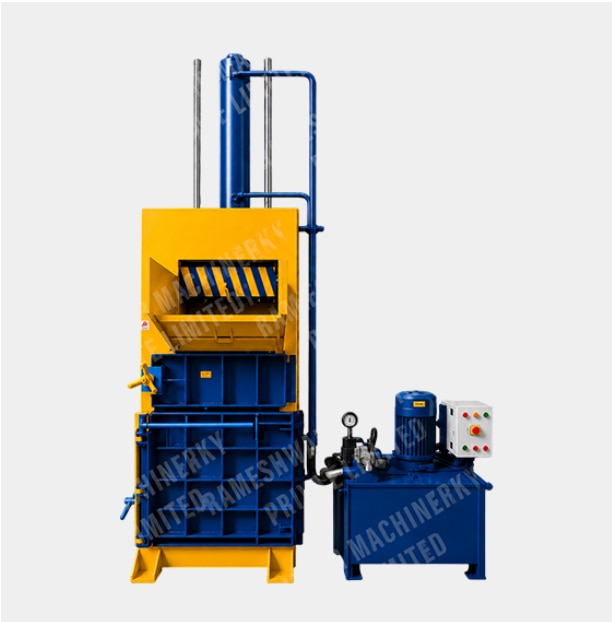 PET Bottle Baling Machine
50 Ton Pet Bottle Baling Press
from Rameshwar Machinery is listed with reference specifications and product imagery sourced from the manufacturer catalog.
View product →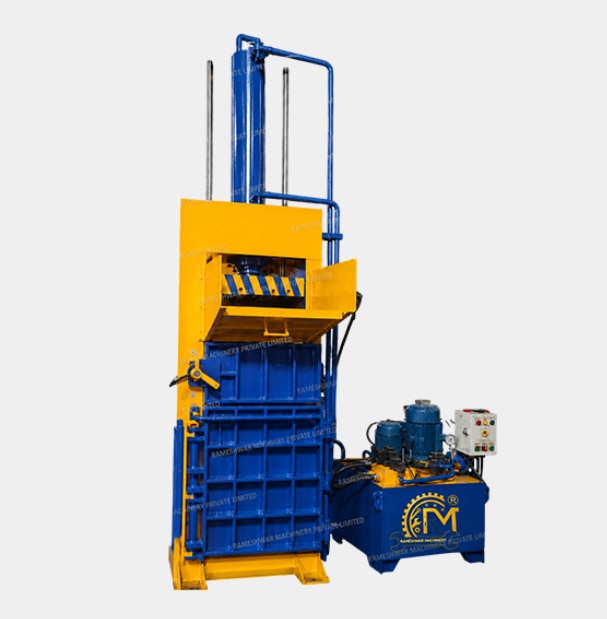 PET Bottle Baling Machine
50 Ton Pet Bottle Baling Press With Pusher
from Rameshwar Machinery is listed with reference specifications and product imagery sourced from the manufacturer catalog.
Keywords